The Hidden VPD Trap That’s Killing Your Indoor Yields (And How to Fix It)
Stop blaming your lighting or nutrients. The real reason your plants struggle is right in the air around them, VPD is silently sabotaging your grow. Fixing it is simpler than you think.
In this article, you’ll gain a comprehensive understanding of how to precisely measure and manipulate VPD for indoor plants to maximize growth and minimize stress. You’ll also learn actionable strategies to automate and optimize your environment based on cutting-edge techniques that veteran growers swear by.
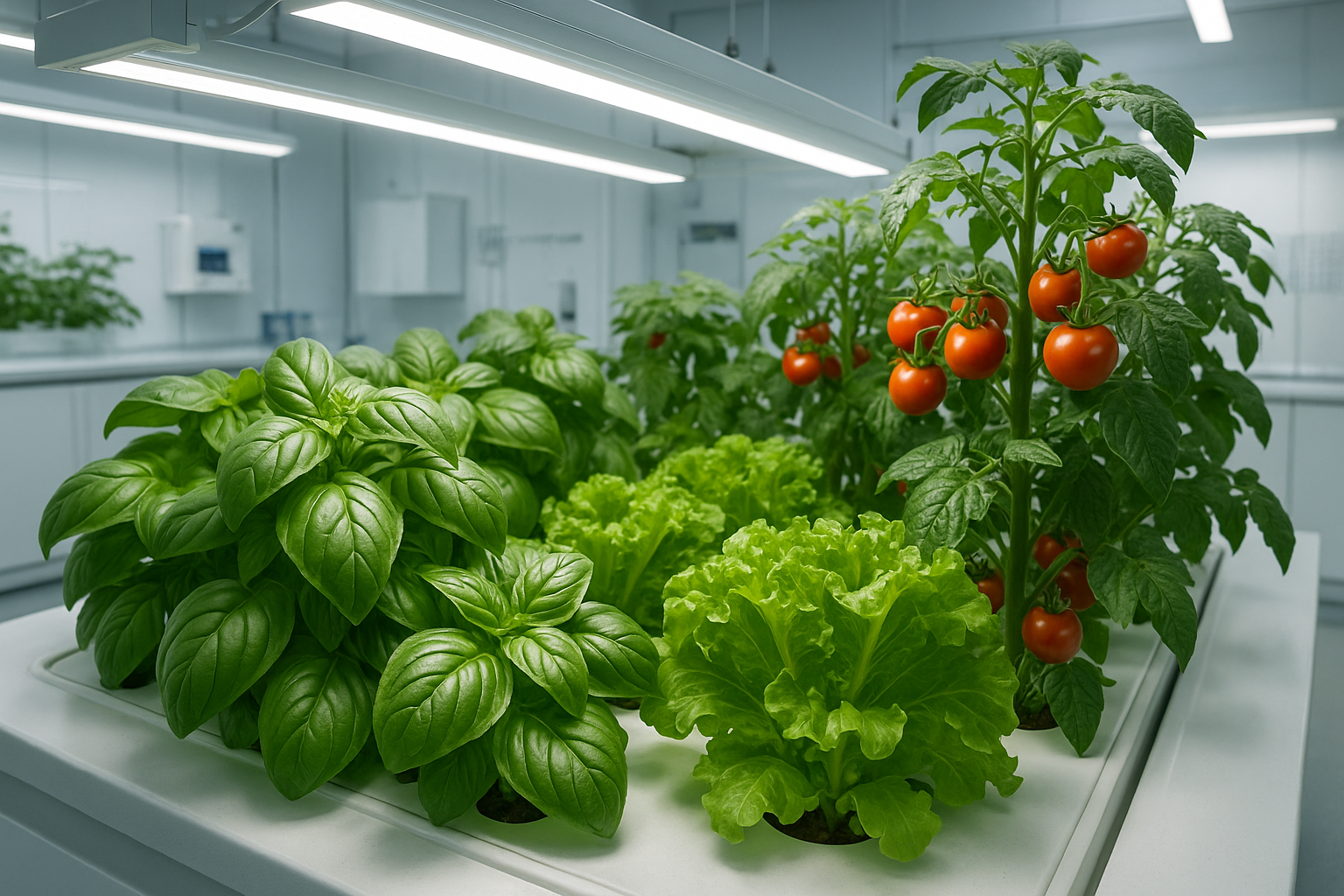
Understanding VPD for Indoor Plants: Beyond the Basics
Vapor Pressure Deficit (VPD) quantifies the difference between the moisture in the air and the maximum moisture air can hold at a given temperature. It’s a dynamic metric that more accurately predicts plant transpiration rates and stomatal behavior than relative humidity (RH) alone.
Understanding VPD for indoor plants is essential for indoor growers, maintaining an optimal VPD range prevents stomatal closure caused by overly humid air or excessive transpiration due to dry air, both of which stunt growth and reduce yields.
Optimal VPD Ranges for Different Growth Stages
- Early Vegetative (Clones/Seedlings): Aim for 0.8–1.1 kPa to encourage healthy stomatal opening without stressing young tissue.
- Mid to Late Vegetative: Maintain between 1.1–1.3 kPa to maximize photosynthetic rates and nutrient uptake.
- Flowering Stage: Target 1.3–1.5 kPa for enhanced transpiration that correlates with increased carbon assimilation and resin production.
Temperature adjustments should consider that a temperature increase of 1°C generally increases saturation vapor pressure by about 0.06 kPa, requiring corresponding RH tweaks to maintain target VPD.
Master Grower Tip: Monitor VPD trends in tandem with leaf temperature and ambient CO2 to truly understand stomatal conductance dynamics. A thermocouple leaf sensor can expose hidden microclimate issues that room-level data miss.
Tools & Techniques for Accurately Measuring and Controlling VPD
Precision in VPD management demands reliable sensors and actionable environmental controls. Simply reading RH and temperature with basic devices Mastering VPD for indoor plants requires precision tools beyond basic equipment.won’t cut it for optimizing high-impact grows.
Comparison: Old Way vs. New Way of VPD Management
| Aspect | Old Way / Manual | New Way / Automated & Integrated |
|---|---|---|
| Measurement Accuracy | Basic hygrometer and thermometer; prone to calibration drift and delayed readings. | Digital sensor arrays with ±2% RH accuracy, integrated leaf temperature probes, real-time data logging. |
| Control Method | Manual humidifier/dehumidifier, fans turned on/off based on subjective observation. | Automated climate control systems with PID loops adjusting humidity, temperature, and airflow precisely. |
| Data Integration | No data networking; manual logging on paper or spreadsheets. | IoT-enabled software platforms integrating VPD, PPFD meters, CO2 sensors, and DLI calculation. |
| Adjustment Frequency | Once or twice daily interventions. | Continuous environment modulation with sub-minute response time. |
| Outcome Consistency | Highly variable; risk of under- or overcompensation leading to stress cycles. | Stable VPD levels within ±0.05 kPa; uniform canopy transpiration and optimized nutrient uptake. |
Master Grower Tip: When upgrading sensors, calibrate new devices alongside trusted reference instruments under your grow conditions to eliminate systematic bias before base-lining automation setpoints.
How to Adjust Your Climate Strategy Based on VPD Insights
Optimizing VPD for indoor plants meansKnowing your VPD doesn’t automatically solve growth issues—you need proven environmental and cultural controls tuned to your crop’s stage and lighting setup.
Coupling VPD with Light Metrics
- PPFD (Photosynthetic Photon Flux Density): Ensure target 400-600 µmol/m²/s PPFD during vegetative for efficient photosynthesis without excess transpiration stress at those VPD values.
- DLI (Daily Light Integral): Maintain between 12-20 mol/m²/day synchronized with VPD adjustments; this balance drives both stomatal behavior and carbohydrate production pathways optimally.
Environmental Control Essentials
- Humidity Control: Use variable-output humidifiers or ultrasonic misters for fine tuning, paired with dehumidifiers controlled via hygrometry within environment management software.
- Temperature Management: Maintain canopy air temperature within ±1°C of your VPD-targeted baseline; modulate HVAC or supplemental heat sources accordingly.
- Airflow & Ventilation: Design airflow to avoid boundary layers of stagnant air—uniform mixing prevents microclimate pockets that skew VPD at the leaf level.
Master Grower Tip: Integrate leaf wetness sensors into your system to avoid prolonged leaf surface moisture during low VPD conditions that would encourage pathogen outbreaks.
Case Study: A Real-World Scenario
Jason, a veteran grower with 10+ years indoor experience, consistently struggled with intermittent growth stalls and uneven flowering density across a His journey demonstrates how proper VPD for indoor plants management transforms grow operations.500 sq ft setup under 1,200W HPS fixtures.
- Initial Conditions: Ambient conditions fluctuated between 30-40% RH and 25-28°C. VPD was averaging an inefficient 1.7–2.0 kPa during vegetation—too dry for sustained stomatal function.
- Issues: Shoot tip burn, leaf curling, inconsistent resin development, and elevated powdery mildew incidents.
Jason implemented:
- High accuracy VPD sensors with leaf temperature probes calibrated to ±0.1 kPa accuracy.
- Automated humidification and exhaust fans regulated by integrated control software.
- Set VPD targets to 1.1 kPa during veg and 1.4 kPa flowering, adjusting RH between 50-60%, temperatures stabilized from 24-26°C.
Within 3 weeks:
- Daily growth rate improved by 18% measured by internode elongation.
- Yield weight increased by 22% on average per harvest cycle.
- Incidence of powdery mildew dropped 85%.
- PPFD readings at canopy averaged 550 µmol/m²/s with DLI of 18 mol/m²/day, perfectly synchronized with VPD control.
Master Grower Tip: Small is huge: marginal VPD improvements compound quickly. Every 0.05 kPa shift closer to ideal can improve stomatal conductance measurably—track gains on a weekly basis and fine-tune further.
Frequently Asked Questions
What is the ideal VPD range for flowering indoor plants?
Flowering stages generally benefit from a VPD range of 1.3–1.5 kPa. This range maximizes transpiration drive and nutrient uptake without inducing Properly managing VPD for indoor plants during flowering maximizes cannabinoid production.stomatal stress, promoting flower density and cannabinoid synthesis.
How can I measure VPD accurately in a multi-level grow space?
Deploy multiple digital sensors at canopy height for each level, including dedicated leaf temperature sensors, and integrate readings into a centralized system to manage environment zones independently. Avoid relying on single-room sensors for diverse microclimates.
Can I control VPD with just relative humidity adjustments?
Controlling VPD requires synchronized adjustments of both RH and temperature because their interplay defines saturation vapor pressure. Adjusting RH alone may lead to suboptimal conditions if temperature fluctuates significantly.
- VPD for indoor plants is a critical lever for controlling transpiration, stomatal behavior, and preventing stress.
- Optimal VPD levels vary by growth stage, with 0.8–1.1 kPa in early veg and up to 1.5 kPa at flowering.
- Automated sensor arrays and integrated climate control drastically improve VPD consistency over manual methods.
- Fine-tuning VPD alongside PPFD (400-600 µmol/m²/s) and DLI (12-20 mol/m²/day) drives maximized yields and quality.
- Real-world data proves even small VPD corrections yield major growth and disease-resistance benefits.